Why Japanese ‘Biyoueki’ Isn’t the Miracle Serum It Sounds Like
Buy biyoueki expecting a miracle and you’ll judge every bottle by the wrong standard.
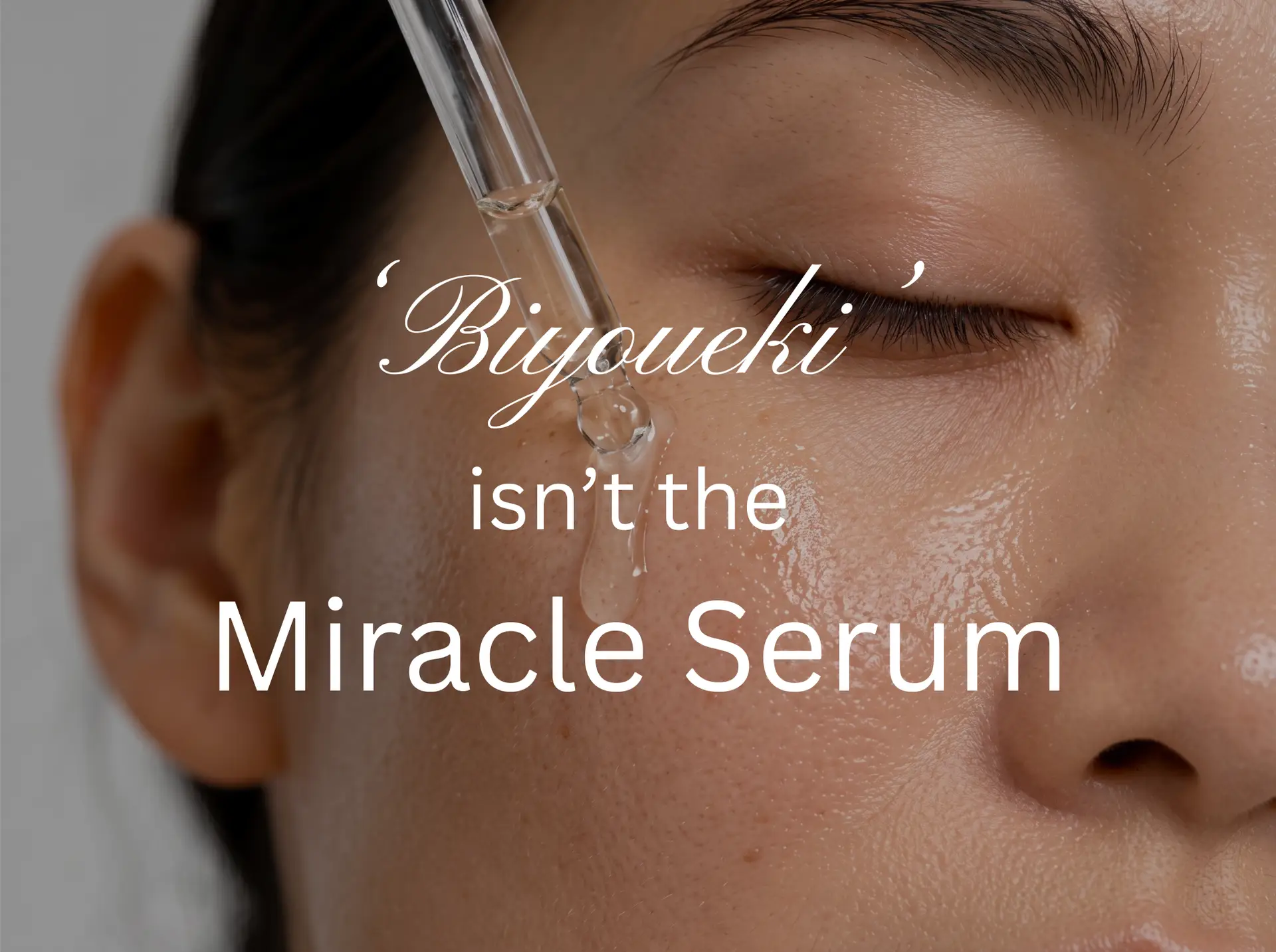
In American beauty aisles, serum sits on a pedestal. Marketing departments present it as a concentrated rescue step, reserved for specific targeted fixes or intense age intervention. American shoppers seeing the Japanese term biyoueki often carry those expectations with them. The literal translation of biyoueki reads as beauty liquid, which sounds luxurious and exceptional. In Japanese bathrooms, however, it occupies an ordinary, practical place within the morning and evening steps.
Japanese routine structure relies on daily balance through thin layers of moisture. Instead of relying on one heavy cream to fix a skin concern, a standard routine applies lightweight moisture from thin liquid to thicker emulsion. In this system, biyoueki serves as a fluid step between hydrating lotion (kesho-sui) and milky moisturizer or cream (nyuuki). It delivers focused ingredients like ceramides, hyaluronic acid, or fermented botanicals in a light format that absorbs cleanly into the stratum corneum without leaving a heavy film.
Standard Hydration Over Emergency Rescue
Japanese drugstores stock biyoueki options that vary widely in price point, formulation weight, and primary function. You can find simple ceramide liquids designed for basic daily moisture alongside medicated quasi-drug formulas targeting specific concerns like dullness or fine lines. People in Japan do not save these formulas for sudden skin flare-ups or occasional pampering. They use biyoueki daily to maintain skin barrier stability across humid summers and dry winters.
Shopping for Japanese skincare on US storefronts requires understanding this everyday role to avoid misplaced expectations. A product labeled as a Japanese serum often feels light, prioritizing long-term moisture retention over dramatic immediate surface changes. Japanese formulations emphasize low irritation, subtle fragrance, and seamless layering. This allows active ingredients to absorb without disrupting your overall skin balance or causing sunscreen to pill during morning application.
Buying these items through US retail channels introduces secondary details that deserve attention. Packaging formats and formulations sometimes differ between domestic Japanese production runs and export versions. In addition, third-party seller listings require checking authorized storefront status to ensure authentic product sources. Knowing what biyoueki does helps you evaluate whether a specific bottle offers real value for your daily routine rather than paying extra for marketing claims.
If you want to evaluate specific items, our guide to Japanese serums on Amazon US covers formulas that fit this layered approach. A Japanese serum isn’t the hero step; it’s the one that shows up every day. Expecting steady, cumulative improvement helps you select formulas that fit how Japanese skincare operates in daily life.
For dry skin seeking gentle seasonal relief, Curél Anti-Wrinkle Hydrating Serum (drugstore-priced) offers a light ceramide formula built for reactive complexions.
For uneven tone, SK-II GenOptics InfinitAura Brightening Serum (a splurge) suits buyers seeking an emulsion texture that softens dullness.
More From JapanPicks